
Published: 01/01/2026
Modified: 02/01/2026
Life in Kosovo and Metohija is Lived in the Mystery of the Cross and the Resurrection
Metropolitan Teodosije’s Christmas Interview for “Jedinstvo”
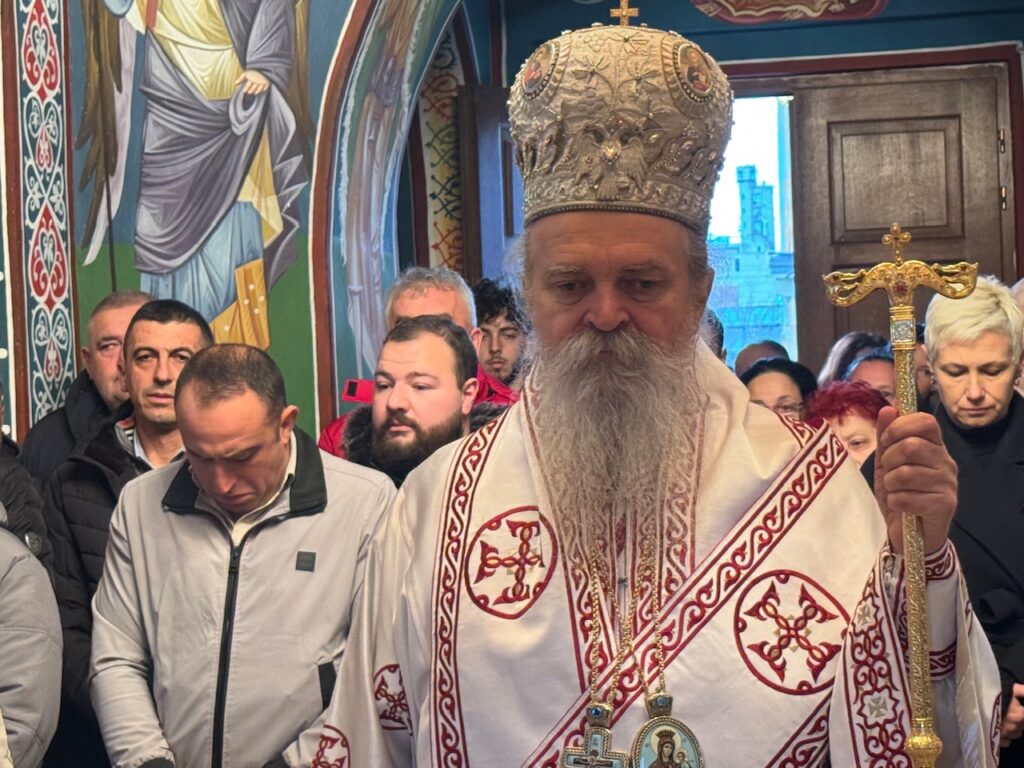
Strength in difficult times is not born of human self confidence, nor of relying on passing, worldly values, but of faith that Christ has conquered death and that no injustice lasts forever. Christmas teaches us the humility of God who becomes man so that we might become partakers of divine glory, and Pascha reveals to us the victory over death. When there is no love, compassion, or understanding in a person, even the greatest outward comfort cannot fill the emptiness, because the heart is made for communion with God and with our neighbour. And a Christian is called to speak in such a way that his word becomes a new reality, a witness to love and truth, without hypocrisy, but also without harshness, said His Eminence, Metropolitan Teodosije of Raška and Prizren and of Kosovo and Metohija.
He stands at the head of a diocese that, from the Battle of Kosovo onward, has been a target of suffering, a land through which caravans have passed and foreign soldiers’ boots have marched. Through his life, his words, and his deeds, everyone feels his pastoral care. He thinks from the perspective of the whole people of God, leaving a strong mark in these difficult times when the voice of truth, peace, and faithfulness to the Gospel matters so much. Firmly rooted in faith, he shares life with ordinary people and their troubles, bringing them hope and spiritual consolation. He teaches us how to trust God without reservation, how to keep His words in our hearts, and how to remain dignified even under the cross we bear. He is Metropolitan Teodosije of Raška and Prizren and of Kosovo and Metohija, and on the eve of Christmas he spoke for “Jedinstvo”.
Your Eminence, can you tell us how you felt Christ’s call to serve the Serbian Orthodox Church and the people, wishing to help them as they walk the path of salvation?
Christ’s call is a quiet summons that is revealed in a person’s heart through prayer, worship, and obedience to the Church. When someone sincerely enters the life of the Church, he gradually begins to understand that it was not primarily he who chose this service, but that the Lord, by His grace, calls him to serve Him, the Church, and his neighbour. Our part is simply, in the freedom God has given us, to accept that divine love which is poured out abundantly upon us. In essence, that call is a call to live the Gospel, to carry the cross, to learn love and endurance, and to offer everything entrusted to us, people, sufferings, joys, and trials, to God as prayer. And service in the Church is above all a continual, prayerful ascent toward Christ in communion, in the Body of Christ, where a person learns to align his will with the will of God and to seek the Kingdom of God in all things, a Kingdom that begins here and now, in the human heart.
War, persecution, kidnappings, and the destruction of holy sites are an unavoidable topic when we speak about your ministry in Kosovo and Metohija. Where do you find strength in all these difficult years, and have you ever thought of leaving the seat of your diocese to seek a safer place?
Strength in difficult times is not born of human self confidence, nor of reliance on passing worldly values, but of faith that Christ has conquered death and that no injustice lasts forever. That is precisely why episcopal service in Kosovo and Metohija is, in a certain sense, a privilege, a continual life in the mystery of the Cross and the Resurrection, because here a person feels very concretely that everything earthly is passing and easily changed, yet what is Christ’s remains eternal and unshakable. When the Divine Liturgy is served in our shrines, we are reminded that the Church is “Noah’s” ark of salvation, and that the safest place is to be within that ark, in Christ’s communion. For this reason, persevering in the place where we are called to serve is a matter of faithfulness to God, to the Church, and to our holy sites. By human logic, any of us might wish to avoid danger for the moment, but a Christian knows that we are not saved by fleeing the cross and suffering, but by faithfulness to Christ in the place to which He has called and appointed us. And so, with prayer to God and with the effort to do what lies within our power, we remain with the people, with the monastics and the clergy, safeguarding our holy places and living in the hope that God always has the final word.
To what extent can the Church help us, as a people, to live more in a spirit of communion, to help one another, and to have sensitivity toward the poor, the marginalised, and the vulnerable?
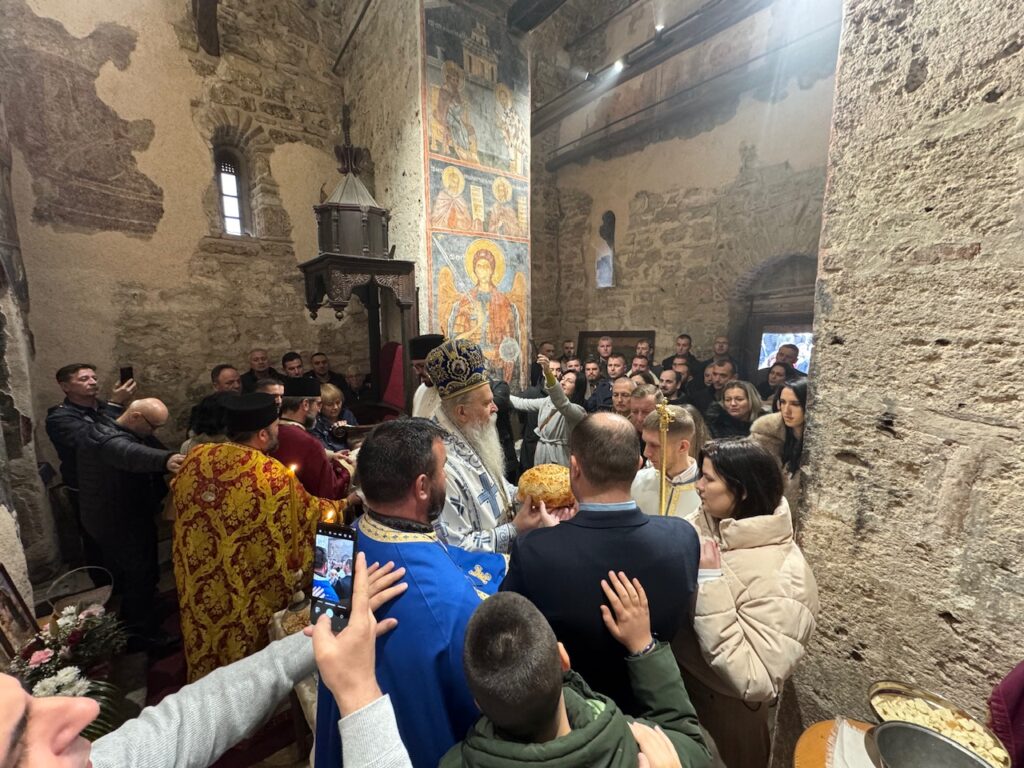
The Church can help people most when we do not remain only at the level of words, but when the spirit of community is revived once again in parish and monastic life, as people once lived, connected, helping one another and bearing one another’s burdens. The spirit of selfishness and individualism destroys both the person and the family, because a person who lives as an isolated individual remains unfinished, always hungry for achievement and validation, and always afraid. By contrast, the eucharistic life teaches us that we do not enter the Kingdom of God as isolated individuals, but as the Church, bound to one another by love. That is why care for the poor, the sick, the elderly, and the marginalised is a kind of test of whether the Holy Spirit lives in us, for whoever feels the distress of his neighbour reveals God’s love within himself. Here the Church should be a teacher and a gatherer, to show mercy, but also to form the conscience, so that no one in the community remains unnoticed and abandoned.
People are often focused on visible, earthly, material things. Can that truly fulfil us and bring happiness if there is no love, compassion, and understanding in our lives?
Visible, earthly, material things are not bad in themselves and are not evil, but they become a trap when they take the place of God in a person’s heart. The consumerist spirit promises joy, yet produces dissatisfaction, because a person tries, through material goods, to overcome transience and the fear of death, and that is not possible. The true joy and peace that Christ gives do not essentially depend on external circumstances, but on our inner relationship with God, on renunciation, on letting go of self loving attachment to what is passing. That is why the Lord says we cannot serve God and mammon at the same time. When there is no love, compassion, and understanding in a person, even the greatest outward comfort cannot fill the emptiness, because the heart is created for communion with God and with our neighbour. The joy of which Christ speaks is not a psychological mood, but the peace of God that is born of humility, gentleness, and thanksgiving.
Although the Serbian Orthodox Church, through centuries of activity, gives the people a sense of security and refuge, it is increasingly faced with objections that it insists too much on preserving Serbian identity and family values, with uncomfortable suggestions that it should remain shut within its walls and not interfere in the life of the people, that is, of its faithful. What would you say to that?
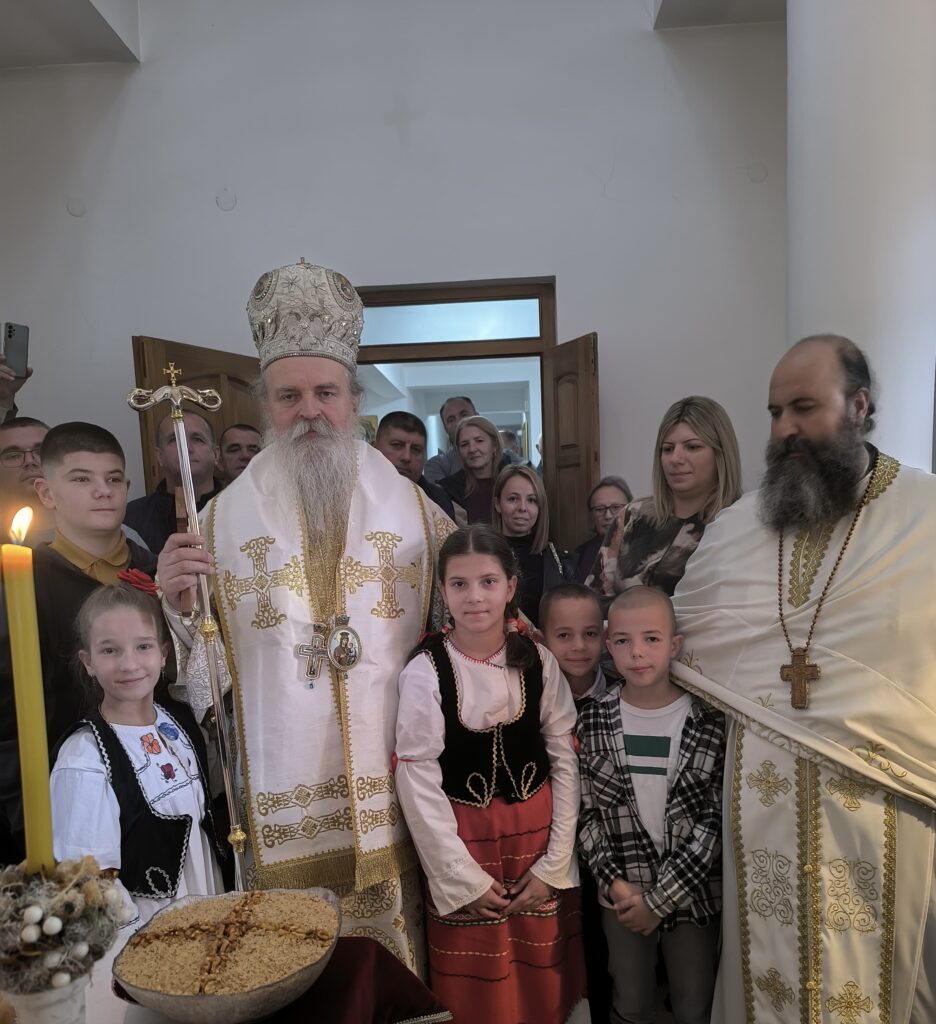
The Church is not called to be shut within walls, because our faith is not a private, personal religion, but the Body of Christ living through the faithful people. When the Church speaks about preserving identity and family values, it is not defending an ideology, but defending values through which a person can remain truly human, a person capable of love, sacrifice, and communion. If we lose the Christian ethos, we may keep certain outward marks of belonging, but inwardly we will become formless, drowned in the spirit of the age that relativises everything and reduces everything to interest. The Church, therefore, does not “interfere” in the life of the people as a political factor, but as a spiritual mother she reminds us that without God there is no true freedom, and that the family is a school of love and responsibility. And where pressure is exerted to silence the Church, a plan and a desire often stand behind it, that a person should be left without a spiritual compass and become easy prey to passions, fears, and manipulation.
How can we free a young person from unhealthy, selfish, elitist ambitions, and build in children and young people an awareness that modesty is a spiritual power by which they attain their own dignity and set up a barrier against vice, violence, and defeatism?
We do not free a young person from unhealthy ambitions simply by reprimanding him, but by offering him, and showing him, the beauty of humility as spiritual strength. Modesty is not weakness, but an inner freedom from the need to prove oneself before others, to be above others, to be first at any cost. The one who learns humility gains a dignity that does not depend on other people’s praise and applause, and in this way we are naturally protected from violence, vice, and defeatism. This is formed from early childhood, in the family, in the parish, in the living experience of the Liturgy, where a child sees that the greatest greatness is to serve God and one’s neighbour. If a young person understands that Christ, the King of Glory, came in humility, to serve and not to be served, then he will understand that elitism is a false greatness, and that true dignity is born of sacrificial love.
If a priest in a holy church preaches to the faithful that, as a people, we are declining in numbers, spiritually, and morally, can that be understood as a discouraging indictment, or as a diagnosis spoken in love and a call to wake up?
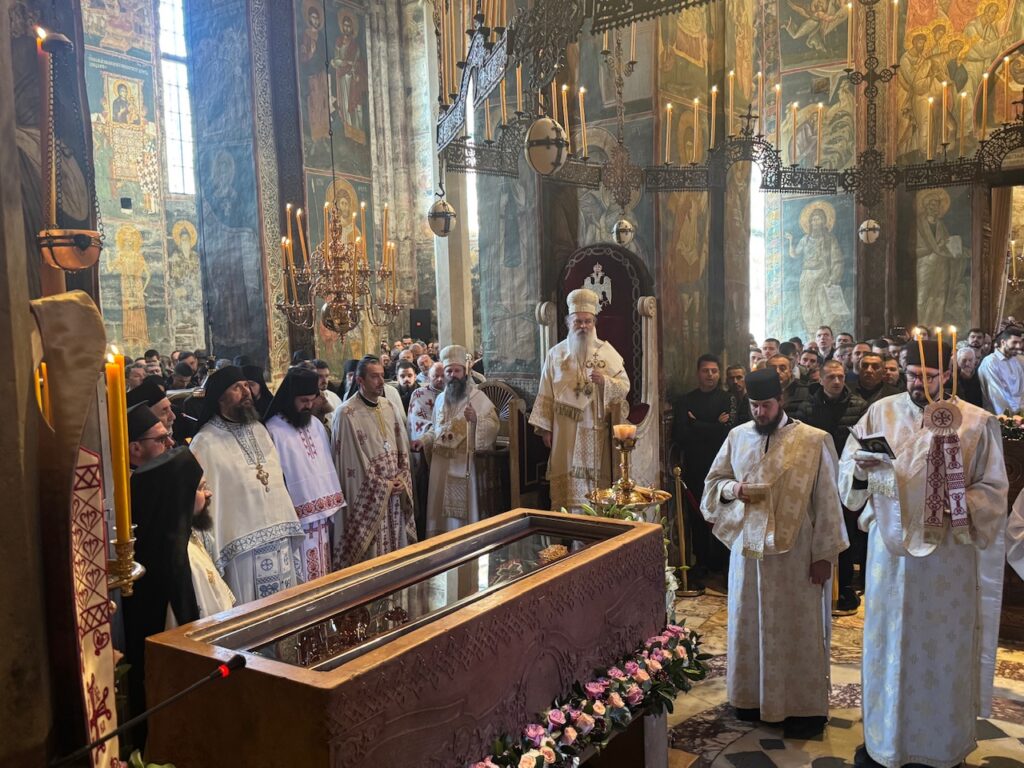
When a priest says that we are declining in numbers, spiritually, and morally, it can sound like an indictment only if it is spoken without love, with bitterness and without hope. But if it is a word spoken out of pastoral responsibility, then it is a diagnosis that heals, because the Church does not speak in order to humiliate a person, but to awaken him. The Lord does not call us to despair, but to repentance, and repentance is not self denial, but a change of mind, a return to God and a return to one another. Every sober recognition of our weaknesses should be accompanied by a reminder that God is merciful and that there is always a path of repentance, if we renounce pride and begin to live the faith in deeds, not only in words.
We witness that the media and social networks create superficial, often false images of success and identity, stirring envy and insecurity on digital platforms, while true human character remains unknown and neglected. How can we cope with the virtual world to which children and young people are especially sensitive?
The virtual world is especially dangerous when it is experienced as more real than reality, and when it begins to shape a child’s identity through false images of success and beauty. There envy, insecurity, and inner division are born, because a person compares his real life with someone else’s polished presentation. That is why it is necessary for children and young people to develop sobriety, moderation, and spiritual criteria. The solution is not only in prohibitions, but in forming the heart, so that young people learn that their value lies in the fact that we are created to be temples of the living God, not online profiles seeking validation. When a person lives prayerfully and liturgically, he gradually gains inner gatheredness, so the virtual noise pulls him less. Parents and pastors should help to create warmth of relationships in the family and the community, because where there is true love and conversation, every digital illusion loses its power.
Will God punish us for earthly sins if we sincerely repent and continue our life on the right path, and are there cases when circumstances lessen moral responsibility and a negative judgement of a person?
God does not desire the death of the sinner, but that he should repent and live. Punishment in the Christian sense is not God’s revenge, but the consequence of turning away from God, a spiritual darkness that arises when a person persistently closes his heart to God and to his neighbour. If someone sincerely repents and begins to live a sober and virtuous life, he opens himself to God’s mercy, because repentance is precisely a return to communion. Of course, there are circumstances that lessen moral responsibility, because God does not judge mechanically. He knows the heart, He knows pain, He knows fears, He knows pressures, He knows what a person carries from childhood and from his environment. That is why the Church speaks at the same time about the seriousness of sin and about God’s boundless mercy, calling a person neither to justify evil nor to despair, but to seek, in humility, a way out, forgiveness, and healing.
Words can make us smile and be glad, but they can also bring tears to our eyes, mark our lives, and even drive someone to death if we speak them thoughtlessly in order to wound others. As people, do we forget the power of words and of God’s word contained in Holy Scripture?
We often forget that a word is not merely a produced sound, but a force that either raises up or destroys. A word can be medicine, but it can also be poison. That is why the Lord warned us that we will answer for every empty and evil word, because a word reveals what is in the heart. When a person stops reading Holy Scripture and feeding on the word of God, his speech becomes empty, thoughtless, rough, and often filled with judgement. Yet a Christian is called to speak so that his word becomes a new reality, a witness to love and truth, without hypocrisy, but also without harshness. If we listened more to the words of the Gospel, then our own words would have more sobriety, more humility, and more responsibility, because God’s word teaches us to see the face of God in the other person.
Can we, by studying history and looking back, recognise God’s action, but also the consequences of wrong human decisions and neglect of God?
The study of history can be spiritually beneficial if it does not become mere learning and listing of events, but if it leads us to understand that every human decision has consequences. When a people turns away from God, the first thing that appears is inner disintegration, divisions, hatred, injustice, and then external troubles follow. But history also bears witness that God does not abandon His faithful people, and that in the hardest times He raises up people of faith, martyrs and confessors, who show by their lives that the Kingdom of God is stronger than the passing kingdoms of this world. Kosovo and Metohija is precisely our covenantal space where history is constantly lived and constantly calls us to faithfulness to God, because here the holy places and the sufferings have become a living memory that teaches us what we were, what we are, and what we ought to be.
Do the powerful and rulers of the world today hear God’s words: “Blessed are the peacemakers, for they shall be called sons of God”?
The Gospel words “Blessed are the peacemakers” are not a political slogan, but God’s judgement upon every power that thinks peace can be built on injustice and violence. The powerful of this world often hear only what suits them, but God’s words remain as a warning and as a criterion. Peacemaking is not weakness, but spiritual courage not to answer evil with evil, and to defend the truth without hatred. Wherever a person is humiliated and wherever justice is trampled, there can be no true peace. That is why the Church constantly reminds us that peace is possible “among people of good will”, that is, where there is readiness to respect the other as a human being and to abandon the logic of imposition and humiliation.
In today’s challenges faced by Serbs in Kosovo and Metohija, both religiously and on the secular level, many residents of the Diocese of Raška and Prizren are in difficulty and have been unjustly accused. How can the diocese help people find joy and hope in their lives again?
Our diocese acts and helps first of all by remaining with its people, by not abandoning the holy places, by serving, consoling, guiding, and gathering. When people are unjustly accused or when they live in fear and helplessness, what they need most is to feel that they are not alone or forsaken, and that their suffering is not invisible. The help is both spiritual and concrete: prayer, counsel, mediation with international representatives where possible, charitable work, support for families, but also a clear witness that injustice is not a normal state and must be called by its proper name. At the same time, the Church guards a person from despair by bringing him back to Christ and reminding him that our life is more than these passing circumstances, that there is an eternal meaning that no one can take away. And so, despite all difficulties, the call is to remain and endure on our own hearths, trusting in God’s providence and His promise that He will never abandon those who follow Him.
Because of discrimination and daily violations of human rights, the departure of Serbs from Kosovo and Metohija is a major challenge, and the tendency to leave is still present. Do we have the right to give up, in view of the example of our faithful ancestors who, despite everything and even harsher trials, managed to remain faithful to Christ and to their homeland?
No one can condemn a person who, out of weakness or fear, seeks a safer place, because each person bears his own cross and cares for his loved ones. But as a people, we have no right to forget the example of our faithful ancestors who, in much harsher trials, remained faithful to Christ and to their homeland, out of deep faith and an awareness that we are called to live as our own on our own land. Renouncing the holy places and the community is not only a change of address, but a spiritual wound that is difficult to heal, especially if we sell inherited property to outsiders, thereby directly endangering our neighbours and those who wish to remain in their homes. That is why the spirit of thanksgiving and responsibility must be renewed within us, so that we help one another and strive to create conditions in which people can stay. And yet, our hope is not in human strength, but in God, with the firm conviction that no injustice lasts forever.
Do we bear sufficient witness, through our lives and deeds, to the Nativity and the Resurrection of Jesus Christ, if we increasingly strip these feasts of spirituality and turn them into an occasion for shopping and entertainment?
If we reduce Christmas to shopping and entertainment, we lose what is essential, and the essence is to prepare the heart to receive the Christ Child within. A feast is not a performance, but a living encounter. Christmas teaches us the humility of God who becomes man so that we might become partakers of divine glory, and Pascha reveals to us the victory over death. Every feast has its meaning. If we do not bear witness to this through our lives, if we do not transform relationships within the family, if we do not forgive, if we do not help our neighbour, then the feasts become unnecessary and empty. That is why the Church always calls us to let feast days be the crown of fasting, prayer, confession, and Holy Communion, because without that there is no true joy. When a person offers God the gifts of the heart, faith, purity, and prayer, the feast becomes living and transformative, for him and for those he loves most.
Interview conducted by Rada Komazec
