
Published: 20/07/2026
Modified: 28/09/2026
Statement concerning the dissemination of falsehoods by Nikolla Xhufka in the Kosovo media
In an interview published on 19 July 2026 by the Albanian-language media outlet KosovaPress, Nikolla Xhufka, a citizen of the Republic of Albania who presents himself as the “archbishop” of a purported “Autocephalous Orthodox Church of Kosovo”, made a series of demonstrably false claims concerning the Serbian Orthodox Church, together with statements which, in our assessment, may contain the elements of the criminal offence of inciting national, racial, religious or ethnic hatred, discord or intolerance. If the Kosovo institutions genuinely stand behind their publicly proclaimed commitment to the equal protection of all religious communities, as required by their own constitution and laws, they cannot leave these statements unexamined, nor can they continue to allow a foreign citizen, who has sown divisions along religious and national lines ever since his first appearance in Kosovo, to do so without any legal consequences.
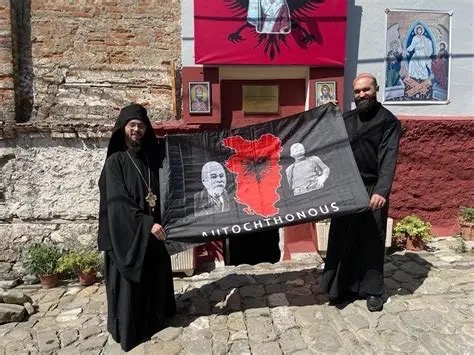
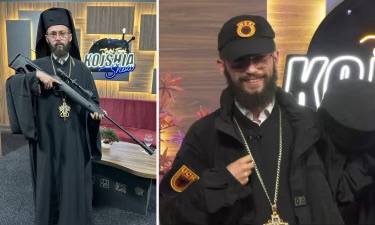
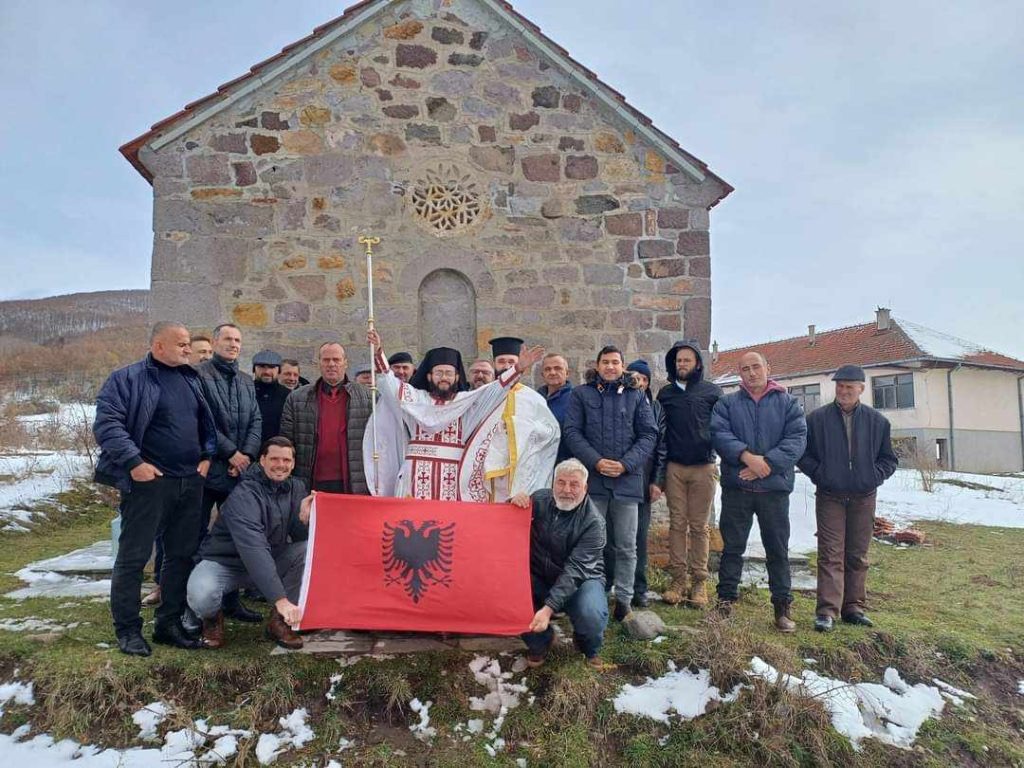 Before addressing the specific falsehoods, it is necessary, for the avoidance of any doubt, to restate one fact. Mr Xhufka is not, and has never been, a cleric of the Serbian Orthodox Church, the Autocephalous Orthodox Church of Albania, or any canonical Orthodox Church anywhere in the world. The Autocephalous Orthodox Church of Albania, the only canonical Orthodox jurisdiction in his own country, stated this publicly as early as November 2022, describing his claims of alleged ordination as a deception of the public. He represents no one but himself.
 In the interview in question, which has been republished without verification by certain Kosovo Albanian news portals and on social media, Mr Xhufka claims that the Serbian Orthodox Church “lost” a court case against his organisation, that he “proved” before a court that the medieval church in Rakitnica does not belong to the Serbian Orthodox Church, and that the case is now before a court of second instance. This is an absolute falsehood. The Serbian Orthodox Church has never initiated, nor has it ever been a party to, any civil dispute with Mr Xhufka, his organisation, or any person associated with him. There is no judgment of any court, at any level of jurisdiction, in which the Church has “lost” anything in his favour, and we categorically reject the claim that any such dispute or judicial decision exists. Apart from the criminal proceedings described below, the Church has initiated no other proceedings concerning Mr Xhufka, nor is it aware of any such proceedings.
 The only proceedings that actually exist are criminal court proceedings against Mr Xhufka. The Church filed criminal complaints in order to protect the medieval Church of the Holy Archangel Michael in the village of Rakitnica, near Podujevo, from repeated unlawful incursions, and also in response to the hatred which this individual publicly disseminates. On the basis of those criminal complaints, one criminal case is currently being conducted against Mr Xhufka and one of his associates, Lejdi Zagalia, who has fled Kosovo. Since this is precisely the case that has been misrepresented in the interview, it is necessary to set out its procedural history accurately.
The case arose from Mr Xhufka’s first incursion into the church in November 2023. The indictment was initially dismissed by a ruling of the Basic Court in Pristina in October 2024, after which Mr Xhufka once again broke into the church in May 2025. The Court of Appeals subsequently annulled the ruling dismissing the indictment and returned the case to the Basic Court for renewed proceedings. In those renewed proceedings, the Serbian Orthodox Church was recognised as an injured party, which had not previously been the case. The first hearing was held on 26 May 2026. The case is therefore not “at second instance”, as falsely claimed in the interview, but at the very beginning of first-instance criminal proceedings, in which Mr Xhufka is not a successful litigant, but the accused.
 Two further criminal complaints, submitted in November 2023 and May 2025 in relation to very serious criminal offences, have to this day resulted neither in an indictment nor in court proceedings. This is difficult to understand in view of the gravity of the reported offences and the penalties prescribed for them.
Ownership of the medieval church in Rakitnica has never been in dispute, nor could it ever have been. The church is a holy site of the Serbian Orthodox Church and a protected cultural monument. If anyone within the police or judicial institutions was at any point misled into doubting that this holy site belongs to the Serbian Orthodox Church, any such doubt was removed as soon as the Church was given the opportunity to submit the relevant documentation, from which its rights indisputably arise.
What Mr Xhufka in fact attempted to do was exploit the disorder in the land and cadastral records left behind by the communist authorities, mistakenly believing that inconsistencies within the official records would be sufficient for him to appropriate something that had never belonged to him. The Church has warned for years that precisely such attempts represent a real danger, one that will continue to exist in the future, and it will continue resolutely to oppose them, just as it is opposing them in the present case.
The discourse concerning the “return” of churches and monasteries allegedly “usurped” by the Serbian Orthodox Church, which in this interview was expanded into a promise that all such sites “will be returned”, represents precisely the phenomenon against which the Diocese warned in its statement of 17 July 2026. These pseudo-historical narratives, refuted countless times by facts and documentation, portray the Serbian Orthodox Church in Kosovo as a usurper of the property of others, rather than as the owner of holy sites which it has built and preserved over the centuries.
This is not a dispute concerning title to property. It is, once again, the placing of a target upon the Serbian Orthodox Church and her faithful in a social environment in which national passions are repeatedly inflamed, on this occasion through demonstrable falsifications and falsehoods. In the same interview, all of this was accompanied by an open call for the head of our Church, the Serbian Patriarch, to be declared persona non grata in Kosovo.
The consequences of such rhetoric are foreseeable. It provides further encouragement to those inclined to believe such pseudo-history and creates a genuine danger to the security of the Serbian Orthodox Church, her clergy, faithful and holy sites, should anyone decide to carry threats expressed online into the physical world, which, as is well known, would not be the first time.
Viewed in this light, statements of this kind, made by a person presenting himself as a religious leader, are not anonymous hate speech from an online account. They constitute clearly identifiable acts bearing the elements of a criminal offence, committed by a known individual, which the Kosovo institutions are obliged to prosecute ex officio.
Here we come to the essence of the problem, namely the attitude of Kosovo institutions towards the Serbian Orthodox Church, an issue which the Diocese also addressed in its statement of 17 July 2026. While the abbot of Devine Vode Monastery, Hieromonk Fotije Kostovski, a citizen of North Macedonia who served in these lands for years without a single incident, was expelled from Kosovo in 2023 without any clear legal basis, the conduct of a citizen of the Republic of Albania who has for years openly directed verbal and physical violence against a religious community that has existed in Kosovo for centuries continues to be tolerated.
The only explanation we can find for such tolerance is that the violence in question is directed against the Serbian Orthodox Church. By tolerating such conduct, a message is sent both to Mr Xhufka and to every other potential perpetrator that any form of violence against the Serbian Orthodox Church will remain unpunished. That message is itself an encouragement to further violence.
Finally, so that the public may understand what kind of “religious organisation” is involved, we draw attention to the third part of the interview, concerning the so-called “registration of believers”. The expression “registration of believers” exists neither as a religious nor as a legal concept. Far more troubling, however, is what accompanied that expression, namely Mr Xhufka’s open declaration that only Kosovo Albanians would be admitted to his organisation.
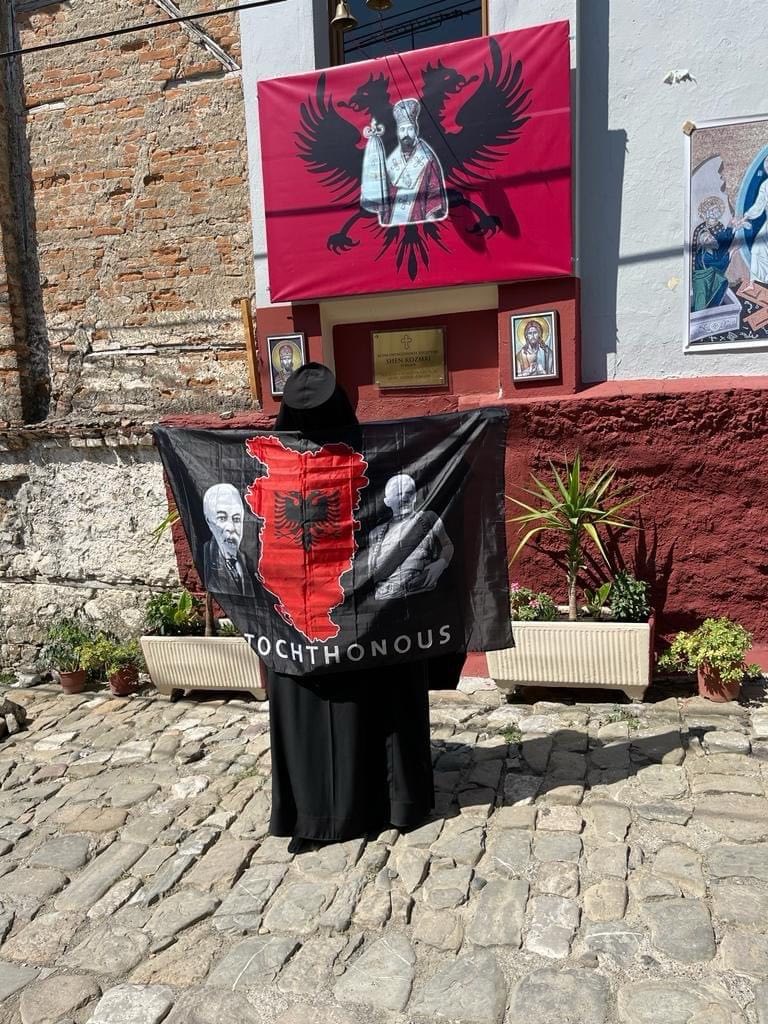
An organisation that conditions membership upon ethnicity and which, wherever it appears, places Albanian flags over the altar alongside icons, as occurred during the break-in at Rakitnica, is not a genuine religious organisation. It is certainly not Christian, and still less Orthodox. It is an organisation that places nationalist activity above faith and above the salvation of human souls, and which cannot credibly present itself as religious because it does not uphold universal human values.
When the Law on Freedom of Religion is finally adopted and the registration of religious communities becomes possible, we expect the competent authorities responsible for deciding upon such registrations to take into account Mr Xhufka’s publicly stated position that the organisation he intends to register would discriminate among “believers” on national grounds.
Furthermore, alongside historically established religious communities, no newly created community should be permitted to use in its name designations already belonging to recognised religious communities. Although this law has not yet been adopted, the Serbian Orthodox Church is already recognised in a range of laws and legal regulations within the Kosovo legal system. Similarly, the legal framework of the Republic of Albania recognises the canonical Orthodox Church of Albania as the only canonical Orthodox Church within the territory of the Republic of Albania.
In view of all the above, we once again call upon the police and judicial authorities in Kosovo to stand behind their publicly proclaimed commitments, to demonstrate in practice that they respect their own laws, and finally to begin protecting the oldest religious community in Kosovo. We also expect the Kosovo media to observe at least the minimum standards of professional journalism by contacting our Church before publishing false information, so that they may receive objective and verifiable facts.
We call upon our faithful not to place any trust in the false claims of a man who has repeatedly shown his true face and who, in this interview, has fully revealed both his intentions towards the Serbian Orthodox Church and his attitude towards the Serbian people.
Prizren, 20 July 2026
Serbian Orthodox Diocese of Raška and Prizren
