Published: 12/08/2026
Modified: 28/09/2026
The Severe Ill-Treatment of Nenad Rašković Requires an Urgent Independent Investigation and an End to Police Repression against Serbs
Statement of the Diocese of Raška and Prizren
Gračanica, 12 August 2026
The Diocese of Raška and Prizren has received with profound concern, sorrow and indignation the harrowing testimony of Nenad Rašković from the village of Dren near Zubin Potok, who yesterday sustained serious physical injuries which, according to his testimony, were inflicted upon him by three Kosovo Police officers.
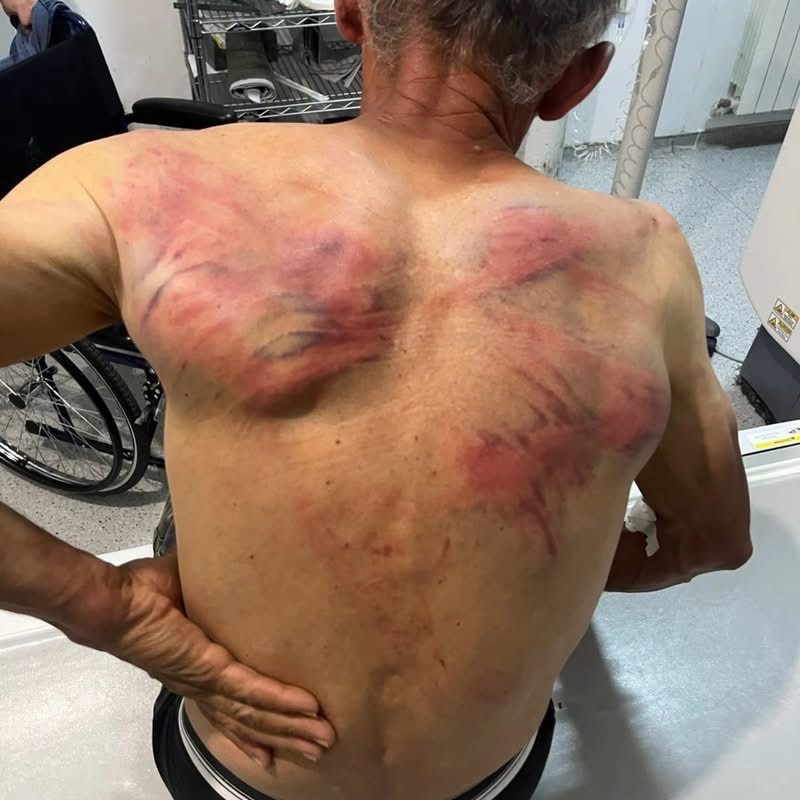
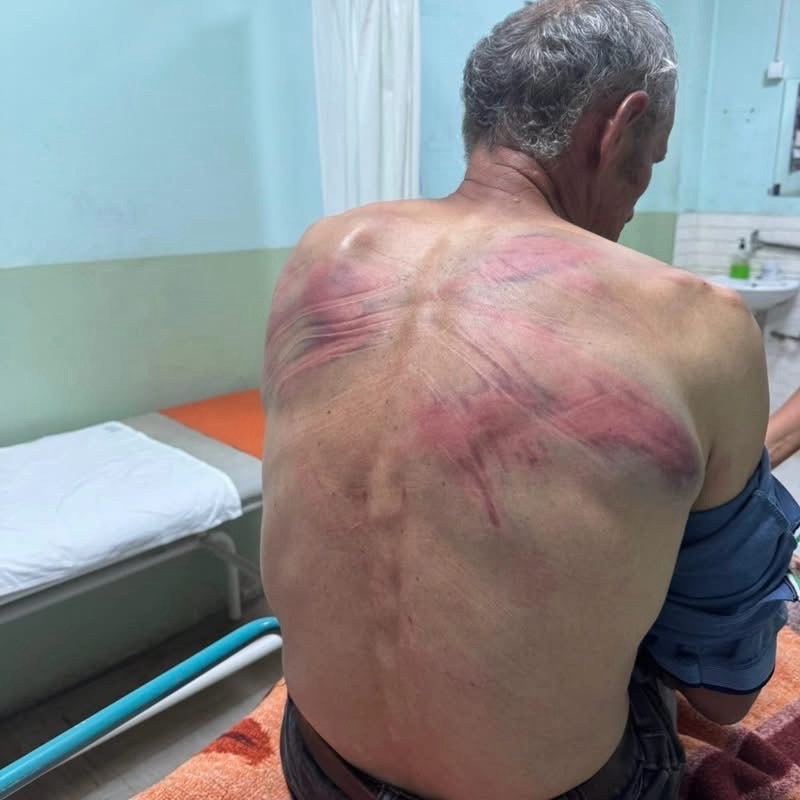
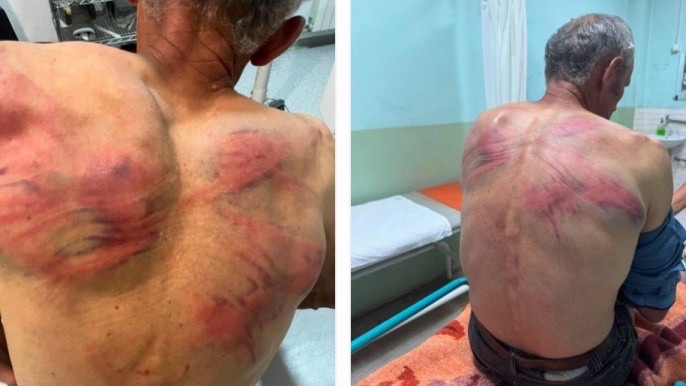 According to the testimony he gave from his hospital bed, the police officers first beat him in his family home, demanding that he hand over a rifle which, he says, he does not possess. They then handcuffed him, took him into the woods, tied him to a beech tree, beat him with a rubber hose and placed a cloth over his mouth. Rašković also testified that they subsequently intimidated his son and harassed his wife, who is of Albanian ethnicity, speaking of sending her to Albania, and that they announced that they would return to his home.
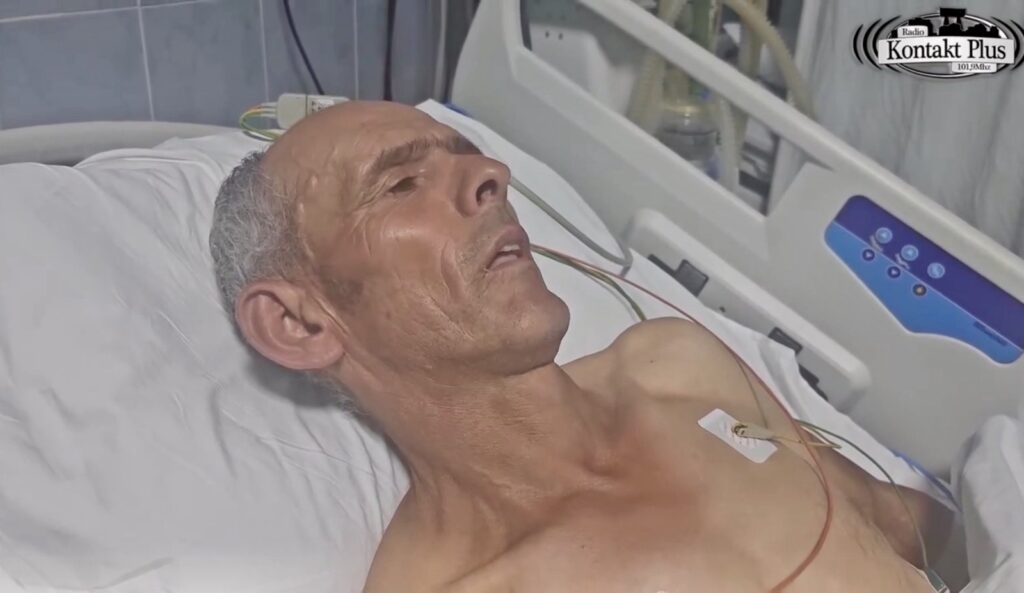 Medical findings confirm that Nenad Rašković was admitted to the Clinical Hospital Centre in Kosovska Mitrovica with injuries to the head and chest, a fractured rib and multiple other injuries. As a seriously injured patient, he was admitted to the intensive care unit and, according to the latest available information, his condition remains unstable.
This is therefore no longer a matter of an unverified rumour that can be dismissed with a generic statement and an expression of concern. We are faced with an identified injured man, his direct and publicly recorded account, visible injuries and medical documentation. An independent investigation must urgently establish the identity of every person involved in the operation in Dren that day, who issued their orders, on what legal basis they entered the Rašković family home, where they took him, and how the injuries documented by doctors were sustained.
 This case is made particularly grave by the fact that it did not occur in isolation, but amid days of almost continuous searches, detentions and police operations in villages within the municipality of Zubin Potok. In recent weeks, police operations have been carried out in Dren, Crepulja, Jabuka, Kaludra and other places, involving several arrests and interrogations on suspicion of weapons possession or war crimes. We are continually receiving testimonies from our people in that area, who say that they are being subjected to open and unprecedented police terror. All of this is taking place amid a political witch-hunt against Serbs conducted by the government in Pristina, which is thereby collectively criminalising all Serbs.
The Diocese does not prejudge the criminal responsibility of any individual, nor does it dispute the right of the competent authorities to conduct lawful investigations on the basis of a court order and concrete evidence. However, no investigation, suspicion or warrant gives anyone the right to beat people, tie them to trees, place cloths over their mouths, extract confessions by force, threaten their families or subject them to humiliation. The use of force to extract a confession bears the hallmarks of torture and constitutes one of the gravest forms of abuse of public authority.
 Regrettably, the case of Nenad Rašković is not the first testimony concerning the abuse of police powers against Serbs. For months, the Diocese of Raška and Prizren, Serbian civil society organisations, representatives of the local population and Belgrade have been warning about such conduct. Civil society organisations from northern Kosovo today once again recalled that they had approached EULEX on several occasions regarding police abuse and other disputed conduct, warning that citizens no longer report many cases because of fear, mistrust and the belief that reporting them will not lead to genuine accountability.
Following the peaceful conclusion of the Vidovdan memorial service at Gazimestan on 28 June, 37 Serbs were detained, including a minor. Several of those detained testified that, while being transported to police stations, they were subjected to physical and psychological violence, ethnic insults and humiliation, while photographs of their injuries were also made public. The Ombudsperson Institution opened an investigation on its own initiative on 7 July, but to this day the public has not been informed of any final findings or of any police officer being held accountable. Like many other instances of police abuse, the entire case will most likely be swept under the carpet.
Soon afterwards, during the patronal feast of the Monastery of the Holy Archangels near Prizren, worshippers, including women, children, elderly people and clergy, were subjected to provocative and humiliating searches, including inspections of women’s handbags and children’s pushchairs. Peaceful participation in the Divine Liturgy was once again treated as a security problem.
When these cases are considered together with the recent demolition of Serbian structures near Gazivode before the conclusion of proceedings seeking judicial protection, the wave of searches and arrests in the north, and the increasingly frequent practice in which the use of force precedes the judicial determination of facts, it becomes clear why the Serbian people’s confidence in the Kosovo Police has fallen to the lowest possible level.
For a growing number of Serbs, the Kosovo Police is no longer a service from which they expect protection, but a force from whose actions they feel they themselves require protection. This represents the gravest possible failure of a police institution and a serious warning for the stability of Kosovo and Metohija and the wider region.
Metropolitan Teodosije of Raška and Prizren drew attention to precisely this visible deterioration in the security and institutional situation on 10 August, during his conversation with United States Senator Joni Ernst, as well as in numerous earlier discussions with representatives of KFOR, the European Union, EULEX, the OSCE and diplomatic missions. It was particularly emphasised that the conduct of institutions, the demolition of Serbian structures, arrests without clearly presented evidence, and the absence of accountability for abuses are creating a sense of persecution and open discrimination among the Serbian population.
The responsibility of the authorities in Pristina is not discharged merely by subsequently announcing that an individual case will be investigated. They also bear responsibility for the political atmosphere in which Serbs are presented almost collectively as a security threat, police operations are publicly celebrated before a court has established the facts, and the excessive use of force, as a rule, produces no visible consequences. In such circumstances, there is a well-founded impression that police arbitrariness is not merely an individual failing, but a practice that is politically tolerated and encouraged, and that is aimed at forcing Serbs to leave and creating an ethnically Albanian area.
We note reports that the Kosovo Police Inspectorate has taken over this case, that Chief Deputy Ombudsperson Srđan Sentić has opened proceedings on his own initiative, and that EULEX has described the allegations as “extremely serious”, recalling that the prohibition of all forms of ill-treatment is absolute. This case, however, must not end with yet another announcement of proceedings, without publicly established facts and without accountability.
The Diocese demands an urgent, independent and effective investigation by the competent Prosecutor’s Office and the Police Inspectorate, under the direct monitoring of the Ombudsperson Institution and EULEX. All persons found to have directly participated in the brutal beating of Rašković must be temporarily removed from operational duties pending the completion of the investigation, while he and his family must be protected from any further pressure or intimidation.
Prolonged silence and delayed, largely generic responses from international representatives in the face of numerous cases of police abuse no longer have a calming effect. On the ground, they are understood as evidence that there will be no consequences, creating a sense of impunity and encouraging further abuses by the Kosovo Police and Kosovo institutions. International representatives cannot simultaneously speak of an improved security situation and then remain silent for months about the visible injuries of people who say that those injuries were inflicted by police officers.
This case also constitutes a serious warning at a time when KFOR is beginning the gradual integration of the Kosovo Police into its security system around Visoki Dečani Monastery, while simultaneously reducing its permanent presence at the main bridge over the Ibar River in Kosovska Mitrovica. Although KFOR has confirmed that it will remain the first responder responsible for the security of Visoki Dečani, any further expansion of the Kosovo Police role at these exceptionally sensitive locations, under the present circumstances and in the absence of the Serbian people’s trust, would be extremely reckless and dangerous.
KFOR itself has emphasised that this process is conditions-based and may be reviewed. A severely beaten man lying in a hospital bed, previous cases of abuse without any public outcome, and the lowest level of Serbian confidence in the Kosovo Police are facts on the ground that cannot be ignored. Without trust, there can be no security, and a people cannot be entrusted to the protection of an institution whose conduct they fear.
The Diocese of Raška and Prizren calls upon its faithful people, particularly the Serbs in northern Kosovo and Metohija, to remain peaceful, composed and dignified, not to succumb to provocations, but also to document and report every instance of threat, violence and abuse. Peace does not mean silence in the face of injustice, and Christian forbearance does not mean consenting to humiliation and lawlessness.
We wish Nenad Rašković a swift and full recovery, and we express our complete solidarity with and support for his family. The Serbian Orthodox Church stands with its people, speaking the truth calmly but resolutely, and demanding that the police uniform once again become a sign of lawful protection for every person, rather than a source of fear, violence and repression.
